Showing posts with label Books. Show all posts

Thursday, August 02, 2018

Favorite Books/Authors

Challenged to post the dust jackets of 7 favorite books (on Facebook), WITHOUT any explanation, I spent a week contemplating the possibilities.

First, for the sake of simplicity, I am limiting my choices to fiction.

Second, I decided to divide my life into decades.  That made it easier to select a favorite from that time in my reading life, despite the fact that ten years is too long of a period for choosing just one favorite.

Third, as I was jotting down titles, I realized that many were part of a series by a single author.

Finally, in order to ease the pain of not defending myself (the selected book titles) on Facebook, I am logging my opinions here, where I can later re-examine them.


Elementary Age (0-9yrs)


I loved reading biographies and have very pleasant memories of library time in elementary school.

The one book cover to make the cut is Little House on the Prairie by Laura Ingalls Wilder, probably because it fits the series approach for cataloging my reading experiences.


Youth (10-19)


I remember loving historical fiction/romance, and started collecting books for my own library.

Lighthouse by Eugenia Price, the first in a trilogy about St Simons Island, is a clear favorite from this time period, in addition to being a favorite vacation spot.


Young Adult (20-29)


I first read Gail Godwin, the author of A Southern Family, during this decade, and did not re-visit her until my forties, when I read five of hers in a row.


Adult (30-39)


Frankly, in my twenties and thirties, I read mostly non-fiction (theology, childbirth, and parenting stuff).  So, anything I read during this decade was very light.  I only finished four in this particular series but it fits my taste for historical fiction.


Adult (40-49)


Over the years, I have revisited this Georgia author sporadically.


This title I enjoyed so much that I bought another and gave it to a good friend.


The first Terry Kay novel that I read was The Year the Lights Came On.


Adult (50-59)


Not too long after I read this book, I heard author Susan Vreeland speak at The High Museum.  What a treat.

Girl in Hyacinth Blue was the first of hers that I read, but not before I'd been introduced to Chevalier's Girl with a Pearl Earring.

In comparison, I prefer Vreeland's novels over Chevalier's.

I was sorry to read that Vreeland died about this time last year (August 2017) at age 71.


Adult (60)


Just now finishing up this 14th novel by Jan Karon, I can wholeheartedly recommend all the Mitford novels.

"I feel like I am there" when I read about Mitford.  It's like a mini-vacation.  Relaxing.

Oh! and I recommend Esther's Orange Marmalade cake, which I have personally baked and shared.


Wednesday, September 17, 2014

Constitution Day

“Dedicated to the coming generation of Americans, with the prayer that they will:
 1)restore the Constitutional principles we have abandoned,
 2)protect the freedoms we have neglected, and
 3)preserve the Republic we have almost lost,”

 Larry McDonald thus introduced the 1976 reprinting of his insightful commentary on the U.S. Constitution, We Hold These Truths.


Re-read the US Constitution today and purchase a copy of this insightful book. Our future depends on an informed electorate.

Saturday, August 31, 2013

LPMcD & KAL 007

30 years ago early in the morning I was awakened by a frantic phone call from a friend who as wondering if I'd heard the news?

Was it for real?

Larry McDonald was on a plane that had been shot down by the Russians?

I had known the congressman all my life, campaigned for him as a teenager, worked for him as a young adult, and admired his dedication.

So, I commend to you this weekend Rescue 007 detailing the horrific act when 269 innocent civilians died.

Here's a link to a CCN article citing the 30th anniversary of the event as well.

Here's a link to my earlier posts about Larry.

Wednesday, August 28, 2013

Dream MLK-style

Unfortunately, King’s conservative Dream has been hijacked by the Left to promote causes King never would have dreamed of supporting, including the legal rights to abortion and same-sex “marriage.” 

King rightly saw that the principles of the Declaration of Independence are rooted in “the Laws of Nature and Nature’s God,” and not in the repudiation of Nature and God for the sake of radical autonomy and equality.

 In severing the essential link in America’s founding principles between law and its trans-political ground in Nature and God, the American Left is making the “rough places plain,” not for the realization of King’s Dream, but for a statist Nightmare.


Author Nathan Schlueter is an associate professor of history at Hillsdale College, my alma mater.

Saturday, May 28, 2011

Much Depends Upon Dinner*


Children in our culture learn manners at the dining table, and not manners only.


It is believed that falling away from the cultural custom of eating with others at table three times a day can cause backwardness in all of a child's speaking skills.

pg 13


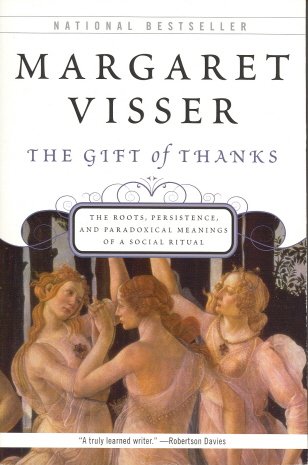
Cultural anthropologist, Margaret Visser, has intrigued me for a long time.  Ever since I received her first book* as a gift.  And while I have not finished reading this one, the two-sentence excerpt above covers a lot of ground when it comes to rearing a family these days.

I think many make the task out to be harder than it really is.

Just remember ~

Eat together often.

Visitin'  happens.

Sunday, May 08, 2011

Mother's Day Menu

Beef Stew Gaston
Steamed Cauliflower
Multi-grain Roll

2006 Cotes du Rhone Red Wine

Apple Pie a la mode
Coffee

The fun thing about this menu is that I prepared enough to send each of my guests home with leftovers - enough for another meal.

Photo of my nephew with his grandmother.

Yes, grandfather was there.

And KSJ.

Le Cadeau Ideal?  NCIS Season 3  ;-)

Sunday Sermon at Chalcedon Presbyterian Church was delivered by Guest Pastor Donald D. Crowe, author of Creation Without Compromise.

Monday, April 18, 2011

It's Time to Sleep

On Saturday I had the opportunity to hear the author of this poem speak, but not about lullabies.  More like an alarm clock, Eric Metaxas captured my attention.  Entertaining in style, authentic in message, and powerful with vision, he shared his hopes for how the life of Dietrich Bonhoeffer could impact our society for the Lord.  Metaxas has a heart for God and demonstrates it in all aspects of his work.  I 'm on a mission to read/collect all of his books, poems, essays, and writings.


"It's time to sleep, it's time to sleep,"
the fishes croon in waters deep.
The songbirds sing in trees above,
"It's time to sleep, my love, my love."
"It's time to sleep, my love."
So, go to sleep, my love.

So, go to sleep, my sleepy child,"
the tiger whispers in the wild.
The otter utters by the lake,
"It's getting hard to stay awake."
"So, go to sleep, my love."
"It's time to sleep, my love."

"Let's go to sleep, my darling love,"
so coos the sleepy turtledove.
So drones the drowsy bumblebee
inside its hive inside its tree.
"It's time to sleep, my love."
"Let's go to sleep, my love."

"I'm getting very sleepy now,"
so moos the tired milking cow.
So croaks the almost-sleeping frog
amidst the settling of the fog.
"So, go to sleep, my love."
"It's time to sleep, my love, love."

Your dreams will be arriving soon.
They'll float to you in sleep's balloon.
They'll be here when I snuff the wick,
you'd better close your eyelids quick.
So you can dream, my love.

And as you dream inside your sleep,
the fishes crooning in the deep, and
all the songbirds up above
will sleep and dream of you, my love,
of you, the one I love.

by Eric Metaxas


Now that you've read through the poem, listen to Sally Taylor sing it.
(daughter of James Taylor and Carly Simon).

What a perfect gift!


Image is by Nancy Tillman and borrowed from her book.

Friday, April 15, 2011

Fire and Ice

Quoted in Frances Mayes's Swan, a book recently reviewed (here) by me, Frost's poem rang a bell not only because I'd just read this fine review of Stanlis's book (link) by my college advisor, John Willson, but also because I'd been contemplating parenting (aka teaching) with the book club selection, Ten Ways to Destroy the Imagination of Your Child.


Some say the world will end in fire,
Some say in ice.
From what I’ve tasted of desire
I hold with those who favor fire.
But if it had to perish twice,
I think I know enough of hate
To say that for destruction ice
Is also great,
And would suffice.


by Robert Frost
American Poet
1874 - 1963


Adding The Poet as Philosopher to my Wish List at Amazon, I'd love to know what's on yours.

Thursday, February 17, 2011

One by One

Book Club Moderator and Virtue-Ordering Mother-Extraordinaire, Cindy asserted yesterday that poetic knowledge trumps the educational trick and better prepares the student for life.

While I dont believe Cindy thinks that math/science should be ignored in the curriculum, I do want to challenge all of us to remember that the poetic exists in those realms as well.

As we read through Anthony Esolen's methodologies (link to Mirus review) for reviving our own imaginations (the only way to keep from destroying those of our children) allow me set before you the advice of one who wielding his weapon did do battle with the times and can help us sharpen our own swords.

Meet the Sage of Mecosta ~ Russell Amos Kirk.

In his autobiography, The Sword of the Imagination, Dr Kirk explains that there is not one sword of imagination, but five!  The historical, political, moral, poetic, and prophetic.

If I may borrow from Gleaves Whitney's ISI book review,

  • Leaders need the historical imagination to understand what humankind has been.
  • They need the political imagination to know what humankind can do in community.
  • They need the moral imagination to discern what the human person ought to be.
  • They need the poetic imagination to perceive how human beings can best use their creative energies.
  • They need the prophetic imagination to divine what human beings will be, given the choices they make.


Cindy's blog name Ordo Amoris (ordering of affections) is a throwback to Augustine's definition of virtue, whick Kirk addresses as well.

This ordering or prioritizing (my word) shows itself in different civilizations which Kirk traced in his book, Roots of American Order.  We Americans have been privileged to inherit the ordering of the soul from the Hebrews, the ordering of the minds from the ancient Greeks, the ordering of polity from the Romans, the ordering of law from the English, and last but most important, the ordering of LOVE from Christ (Christians).

Now with that background, let's be on our mission of redeeming the time with our young (potential) leaders.

What are yours reading today?


Photo Credit: Julie Robison
Family Heirloom Sword
situated above the mantel at
Piety Hill, Mecosta, MI
home of Russell and Annette Kirk

Dr John Willson (seated before the fireplace in above photo) is giving a short lecture about this knight errant to Hillsdale College students who made a pilgrimmage Kirk's ancestral home last Spring.

Today, however, here's a link to what you should be reading: Dr Willson's exhortation for recovery, Was There a Founding?,at e-zine, Imaginative Conservative.

Saturday, January 29, 2011

Sparking the Imagination

Book club hostess, Cindy, of Dominion Family Fame, rightly is focusing on literature which fuels the imagination and is giving us the opportunity to make suggestions, submit a list.

There are several books on my shelf which address this topic, like Gladys Hunt's Honey for a Child's Heart, Elizabeth Wilson's Books Children Love, or Elizabeth McCalllum's The Book Tree.

Last year's book club selection, Norm's and Nobility's final chapter outlined an high school curriculum that Cindy still wants to discuss.

But here I share some upper-level suggestions, because

1)  there are already many good choices listed for preschoolers and elementary-aged children; and


2)  where there is no vision, the people will perish.  That is to say what you hope for your children may not happen, if you have trouble with expectations.

So, I reveal Dr. Kirk's list from his book Decadence and Renewal (Chapter 3 entitled Perishing for Want of Imagery) since many may not have immediate access to this book, but may have highschoolers on the premises.

In this case, Kirk states that these students between the ages of thirteen and eighteen ought to be treated as young adults (notice the non-use of the term *teenagers*- link to lecture on that issue) and actually or potentially capable of serious thought.

These books are calculated to wake the imagination and challenge the reason.  None ought to be too difficult for most young people to apprehend well enough -- provided that they are functionally literate.

Nineth-Grade Level

Bunyan's The Pilgrim's Progess
Shakespeare's A Midsummer Night's Dream
Hawthorne's The House of Seven Gables or The Marble Faun
Stevenson's Kidnapped
Bradbury's Something Wicked This Way Comes or Dandelion Wine
Scott's Rob Roy or Old Mortality
Poems selected with an eye to the marvellous and the mysterious from Spenser, Burns, Coleridge, Wordsworth, Shelley, Tennyson, Whittier, Longfellow, Chesterton, Kipling, Masefield, Yeats, Frost

Tenth-Grade Level

Defoe's Robinson Crusoe
Shakespeare's Macbeth or Julius Caesar
Parkman's The Oregon Trail or The Conspiracy of Pontiac
Twain's Huckleberry Finn or Life on the Mississippi
Franklin's Autobiography
Thackeray's The Virginians or Henry Esmond
Melville's Typee or Omoo or Whitejacket
Selected poetry of a biographical or historical cast.

Eleventh-Grade Level

Milton's Paradise Lost
Swift's Gulliver's Travels
Dickens' Great Expectations or David Copperfield
Eliot's Murder in the Cathedral
Orwell's Animal Farm
Shakespeare's As You Like It or The Merchant of Venice
Selected poems of a speculative cast

Twelfth-Grade Level

KJV Epistles of Paul
Johnson's Rasselas
M Aurelius' Meditations (Long's Translation)
Burke's Speech on Conciliation with the American Colonies
Lewis's The Screwtape Letters or The Great Divorce
Marlowe's Doctor Faustus
Santayana's The Last Puritan
Joseph Conrad short stories
Coleridge's The Rime of the Ancient Mariner
Selected poems of Frost, Robinson, Masters, Eliot, Santayana, Chesterton and other 20th century poets

Well, there is no doubt that I have my own work cut out for me, as I have not read many of these.

That may account for my lack of imagination.

Which is why I'm reading a book about it with a bunch of people I dont know in real life.

I'm throwing a spark on that pile of dry wood in my head, hoping to light a fire that will keep me warm until the end of my days.

Thursday, January 27, 2011

Top Ten:  Parenting Books

1)   The Bible
2)   The Example (my parents-book yet to be published )
3)   Withhold Not Correction by Bruce Ray
4)   Six-Point Plan for Raising Happy, Healthy Children  by John Rosemond
5)   The Hidden Art of Homemaking by Edith Schaeffer
6)   Every Child Should Have a Chance by Leila Denmark
7)   Teach Them Diligently by Lou Priolo
8)   Ten Ways to Destroy Your Child's Imagination by Anthony Esolen
9)   It Takes Backbone to Raise Terrific Kids by Carol Demar
10) The Strong-Willed Child by James Dobson

Tuesday, June 15, 2010

Fathers, Cars, and Dogs

Reviewing Jan Karon's latest book, Home to Holly Springs, caused me to ponder fathers, in general, and our relationships with them.

More specifically though, I began thinking about their cars and dogs... and what that says about them, if anything.

Uncharacteristically (at least in my mind) does Father Tim drive a red mustang convertible!  His mutt is no less than a Bouvier with a lot of Irish Wolfhound named Barnabas, nick-named Gentleman.

My father's dream car was a 1968 Pontiac GTO convertible. This army green antique is still in the family, in the predictible possession of my younger brother who was the last to drive it.


His dog?

My father's family dog was a white Sptiz named Snow. There is an hilarious story about a special encounter between Snow and the family cat, Saggy.  It's worthy of its own post.... another day ;-)

 As an adult, we had Weimaraners. Legend and Otto. Oh, the stories about those family pets.


.


So, join in.

Tell me about your father, his car, or his dog.

And if you dont know, invite him for dinner this week and ask him.

It's family history.

Better late than never.

Wednesday, April 14, 2010

The Quadrivium

Last year when I was reading Josef Pieper's Leisure:  The Basis of Culture with an online book club, I ran across the following poem and saved it for sharing during National Poetry Month.

Currently, the group is hashing out their
philosoph(ies) of education as they read Norms and Nobility by David Hicks.

While I havent made it much past reading the acknowledgements and perusing the bibliography of the paperback edition, I have found this poem to be a propos.  the discussion.

I also appreciate its logic.


Science begins in brain;
Philosophy begins in mind;
Poetry begins in ear and mouth;
Religion begins in breath.

For science to say anything about life, it must experiment;
for philosophy to say anything about life, it must exhaust words;
for poetry to say anything about life, it must listen;
for religion to say anything about life, it must fall on its face.

Where science ends, philosophy begins;
where philosophy ends, poetry begins;
where poetry ends, death begins;
where death ends, religion begins.


By Allan Roy Andrews

Here's a link to the poet's blog.

The poem appeared originally in Voice, a newsletter of St. Martin's-in-the-Field Episcopal Church, Severna Park, MD, February 2002.


Definition/Etymology of Quadrivium:

The higher division of the seven liberal arts in the Middle Ages, composed of geometry, astronomy, arithmetic, and music.

[Late Latin, from Latin, place where four roads meet : quadri-, quadri- + via, road; see via.]


Thursday, April 08, 2010

The Adversary


Mothers are hardest to forgive.

Life is the fruit they long to hand you,

Ripe on a plate.  And while you live,

Relentlessly they understand you.


Phyllis McGinley
American writer/poet
1905 - 1978

Saturday, October 17, 2009

Leisure and Education in America

George Roche had a powerful influence in my life and in the life of the institution he lead for 28 years.

It was not until after I had completed my Hillsdale career that I felt the need to study his book, Education in America.

My copy is autographed - To Dana - who knows that a better way exists to educate our young - George Roche.

First published in 1969 and acquired by me in 1977, I didnt re-read it until 1990, when we began making serious choices for the schooling of our four charges. I bring it to your attention today because I continue to enjoy this topic and think his book sheds bright light on the questions arising from my current book club.

Cindy, at Dominion Family, is a fun mother of nine who thinks. I like her blog posts because she has knack for illustrating problems and providing a friendly forum for discussions. Currently the term *classical* is bothering her, especially as it applies to education.

That's why I went to my shelf in search of Dr Roche's excellent volume. He TWICE references the esteemed Josef Pieper, whose book Leisure: The Basis of Culture is our book club selection.

Because I think most readers skip/skim through lengthy quotes, I'm going to post links only to these two references. The first is from Roche's chapter three entitled *Scientism and the Collapse of Standards*. The second is from chapter eight, *Multiversity*.

In the comment section of Cindy's query about the definition of *classical* education, I noted that discernment is required. We must be ever vigilant of the words used by those we trust.

While many parents complained about attending Parents Nights (at our children's schools) and listening to the same old rhetoric, I did not. Not only was I there to show my support, but also I was making sure that those in charge were staying true to stated vision (definitions) that we had used to make our school choices.

In conclusion, without a link, the last two paragraphs of Dr Roche's Education in America, entitled *Ultimate Solutions*.

Educational reform must begin with parents as individuals, with the recognition that better upbringing for their children lies in their hands, not in the hands of the state. If and when enough parents begin living their lives self-responsibly and apply such principles to their children who are an extension of self, a new educational day will have dawned. The answer, then is not to "throw the rascals out," substituting good men for bad in the political control of collectivized education. Instead, let each act in his own small orbit, with his own children, with those who he influences directly. If one's example and understanding are of high enough quality, the education pciture will begin to change no matter what course politicalized education might take.

Those who effect great revolutions are always small in number. Such people need not wait to become a majority. No one else can do the job except those who understand what needs to be done. The disruptive influence of political centralization in education will continue until it has been overshadowed and rendered meaningless by a moral force of sufficient intensity, a force generated by individuals who understand what is at stake and who serve notice by their own example that a better way exists to educate our young.


If you're reading this, then that means you're already overshadowing and on the path to rendering meaningless statist education.

We are a moral force of sufficient intensity.

Dont lose heart!

Wednesday, October 07, 2009

To Kosciusko

GOOD Kosciusko, thy great name alone
Is a full harvest whence to reap high feeling;
It comes upon us like the glorious pealing
Of the wide spheres - an everlasting tone.
And now it tells me, that in worlds unknown,
The names of heroes, burst from clouds concealing,
And changed to harmonies, for ever stealing
Through cloudless blue, and round each silver throne.
It tells me too, that on a happy day,
When some good spirit walks upon the earth,
Thy name with Alfred’s, and the great of yore
Gently commingling, gives tremendous birth
To a loud hymn, that sounds far, far away
To where the great God lives for evermore.


John Keats
English Poet
1795 - 1817


In keeping with my book club and Cindy's post promoting the memorization of poetry, especially for boys, I went in search of one to highlight.

While this particular verse heaps praises on the hero, it provides few details of the general's military prowess. I think just learning how to spell Thaddeus's last name would be a fine accomplishment. Then I could search for books about him.

I first learned of him because I have a friend from Koscuisko, Mississippi. Now I know his birthday is October 31st. And that President Obama recently received a copy of the book, The Peasant Prince, from the President of Poland.

What do you know about this Polish-born American patriot?


On a side note, anyone thinking of seeing the new movie (Bright Star) about John Keats?

Saturday, September 12, 2009

The Snow Goose

Illustrator Beth Peck's reputation drew my attention to The Snow Goose,

but it was author Paul Gallico's touching story of sacrificial love that captured my heart.


Set during the early 1940s, the narrative establishes the friendship of two unlikely characters in the small coastal town of Dunkirk.

Philip, the misfit artist and nature lover befriends Frith, a teenaged girl who brings an injured bird to his isolated doorstep. While this storyline develops and resolves, another is happening in the world at large - wartime.

At this point, the plot becomes both historical and spiritual. Philip is departing in his boat to help stranded soldiers.
Frith stared at Philip. He had changed so. For the first time she saw that he was no longer ugly mis-shapen or grotesque, but very beautiful. Things were turmoiling in her own soul, crying to be said, and she did not know how to say them.

The Snow Goose rates high on my list of gift books. The writing is descriptive, the plot instructive, and the illustrations enchanting.

I am not sure who will be the beneficiary of my copy.

Tuesday, March 17, 2009

Orange Roses


Still having fun tying scarves in different ways, I'm wearing this one today. I had to go back and rewatch Big Mama in order to remember how to make that knot.


The orange is significant because I like to talk about my Protestant (Scotch-Irish) heritage and counterpoint the green-loving Irish Catholics... on this man-made, Hallmark holiday.

Sounds a little rebellious, huh?

Just a little.

How are you celebrating St Patricks Day?


This year's reading assignment is Chapter 2: Domestic Life of the Lowland Scot.

Quotes to follow :)

Monday, January 28, 2008

Marriage on Mondays

Getting along with men isn't what's truly important. The vital knowledge is how to get along with a man, one man.

Phyllis McGinley (American author 1905 - 1978)


Marriage to a Difficult Man is an unfortunate title for the book I'm reading, because it really is a very readable volume covering the life and times of a famous preacher and his wife.

It's been several years since I first became aware of the biography, but I just now bought it: one for me and one for a gift ;)


Several others are talking about the Edwards. Desiring God's, Noel Piper, has a short lecture available online; and T M Moore (Breakpoint columnist) has edited several books, which seem to be suitable for Sunday School classes.

The Pipers introduce the reprinted 1971 Elizabeth Dodds biography and promote it precisely as an ingredient needed to reform the unbiblical, modern concept of marriage.

While I've only completed three chapters, I'm looking forward to learning more about how the well-educated Sarah was a suitable help for the large personality of her famous husband.

Her wedding dress is mentioned (it was a pea green brocade) as well as some of the gifts they received (silver porringer and pewter dishes). But the truly revealing tidbit:

The interior of their house was most of all distinctive because it was full of books


Did you receive any books as wedding gifts?

Wednesday, December 12, 2007

Economics for Children a la Richard Scarry

In just a few short weeks (that's January 7th), our *blogging bookclub* will read and review Henry Hazlitt's Economics in One Lesson. This book was chosen because we were disappointed in our incorrect answers to economics-related questions found in this online quiz.

So, in preparation for this assignment, I've scoured my bookshelves in search of all things Richard Scarry, the author of many a child's favorite books.


Today I commend to you his What People Do All Day because it illustrates clearly basic economic principles. This book is classified as juvenile non-fiction and proves that it is never too early to start teaching our children economic theory, poetry, or etymology.


Here's a quick list of the chapter titles:

1) What Do People Do All Day?
2) Everyone is a Worker
3) Building a New House
4) Mailing a Letter
5) Firemen to the Rescue
6) A Visit to the Hospital
7) The Train Trip
8) The Story of Seeds
9) Wood and How We Use It
10)Building a New Road
11)A Voyage on a Ship
12)Where Bread Comes From


There is a companion title by Scarry called The Busiest People Ever, and it includes a chapter *Busy House Workers*, which is unfortunately omitted from the newer editions of What Do People Do. I can remember spending hours looking at Scarry books, pouring over the details and pictures.

Do you own any Scarry?

It wont take you an hour to read this fine article about one father who reads to his youngsters, teaching economics at a very early age. Even philosophy can be taught early on ....and not by reading aloud Richard Weaver's Ideas Have Consequences, but by recording for posterity Yellow and Pink, an out-of-print volume which is charming. It's never to early to talk about the first question of the Children's Catechism.

It is always perplexed me when someone asks a SAHM *What do you do all day*. I guess I am at a loss for words because it seems so obvious to me that taking care of a family is a full-time job full of all kinds of tasks, no matter whether your children are younger or older. Have any of us consider how we will keep our children connected after they are grown and married? While my mother has never worked outside the home, she has to be one of the most industrious people I know. Here's a link to how she stays busy.

If that does not answer the insipid inquisitor's question, I guess I will refer him/her to Richard Scarry.


Oh, and the word derivation assignment for today is *economics* . Answers in this link :)